
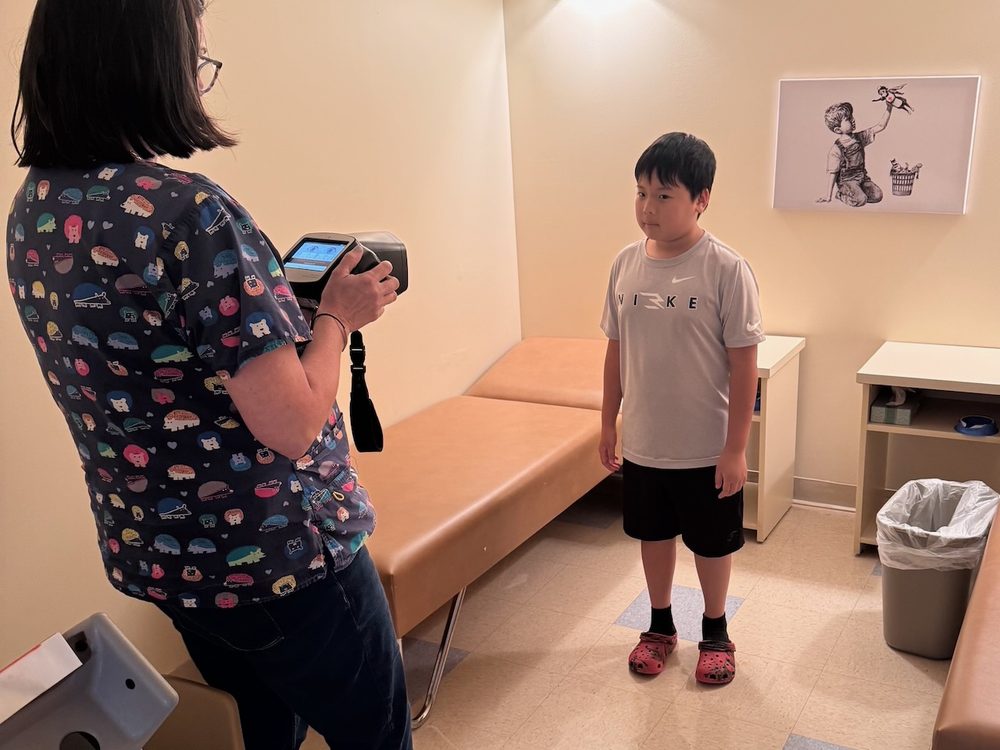
Manheim Township School District nurse Karin Lancelotta thinks of one particular student in the autism support program every time she talks about the district’s new Spot Vision Screener – and her motivation for seeking MTEF funding for it.
“He was my reason,” she says. “I just knew he couldn’t see.”
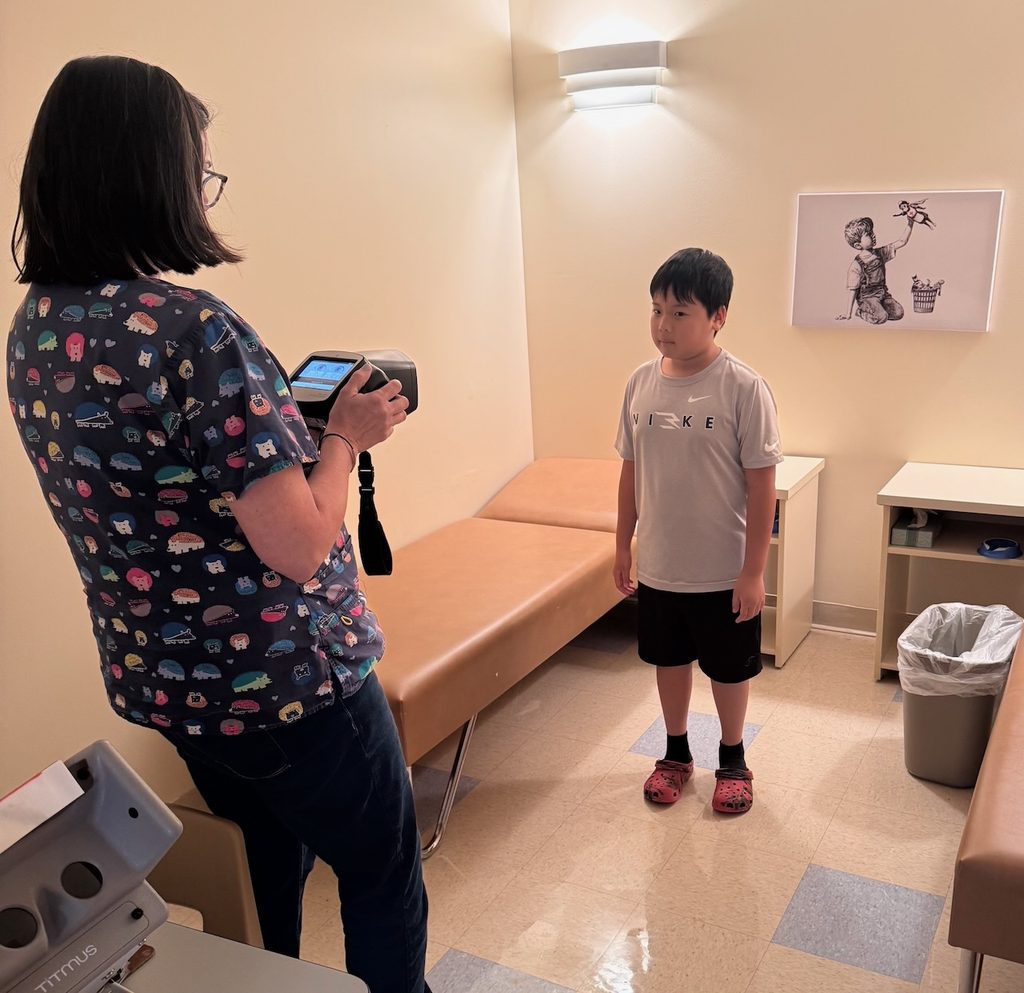
But traditional vision tests, which require students to read charts and verbally explain what they see, can present significant challenges for students with autism, thus complicating the screening process. That’s where the Spot Vision Screener comes in. This “point-and-shoot” handheld technology works from a non-invasive 3-foot distance. It requires zero verbal communication or tracking instructions from the student and captures accurate data in seconds.
The device provides a non-verbal, medical-grade assessment, ensuring that students who struggle with traditional eye charts, specifically English Language (EL) learners and those with intellectual disabilities, receive the same high standard of early detection as their peers.
“It’s such a cool tool,” Lancelotta marvels. “It provides another piece of the puzzle. Do they need something more?”
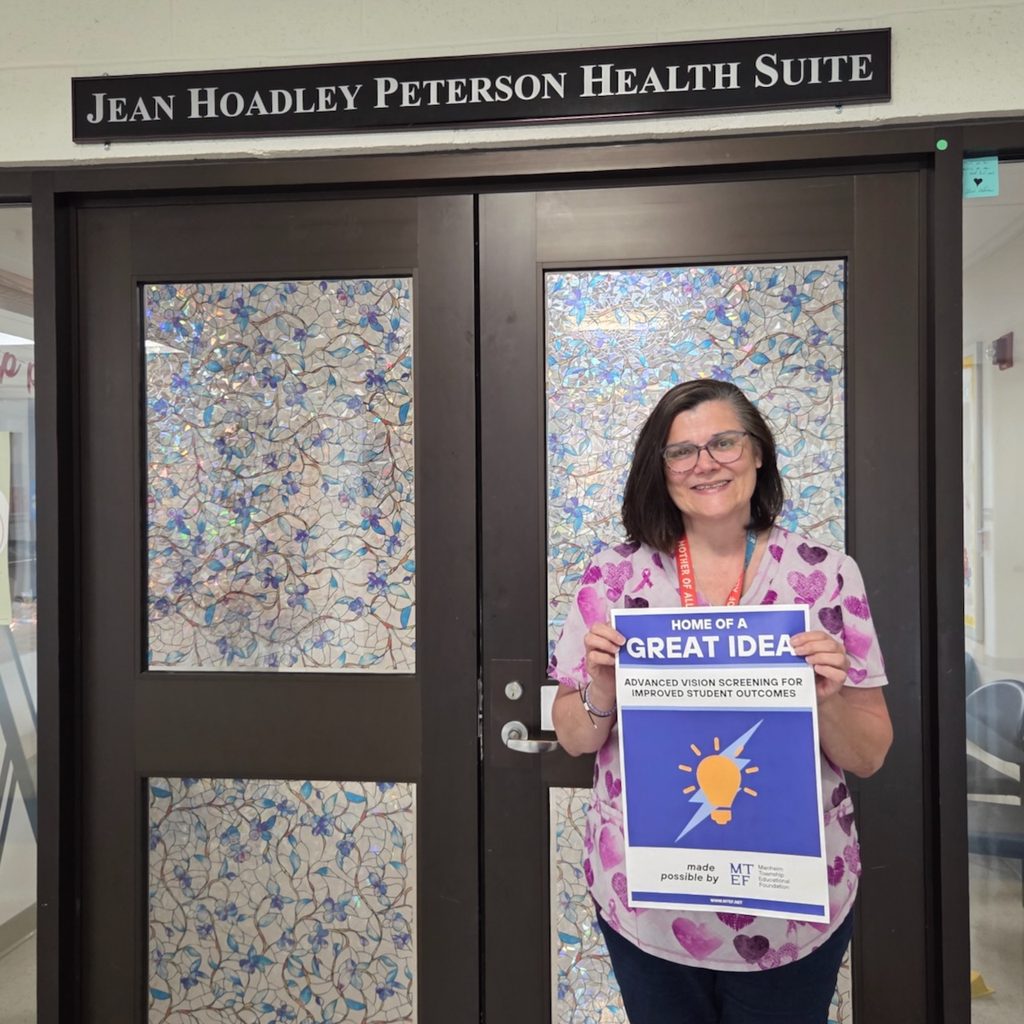
The Health Services team was able to borrow a vision screener from VisionCorps on a temporary basis last school year. Convinced that permanent access to the technology could help district staff perform more effective screenings and evaluations, and benefit students district-wide, she applied for and was awarded grant funding from Manheim Township Educational Foundation.
Two months into this school year, school nurses as well as other health professionals across the district are already making great use of this highly portable device. School-based occupational and physical therapists now can perform evaluations with a standardized, handheld tool providing them with objective data on a student’s gaze and alignment, critical for tailoring therapeutic goals and functional support.
Even school administrators are requesting that the screener be administered. “It helps us look at the whole kid. Are certain behaviors the result of not being able to see?” Lancelotta explains.
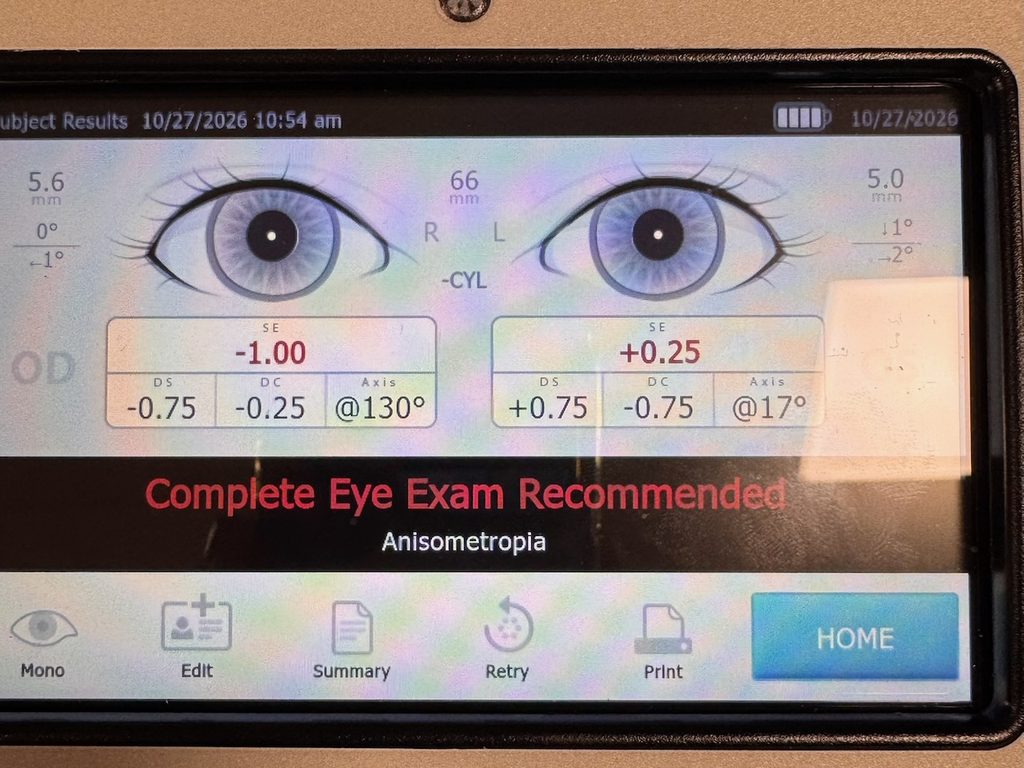
While eye charts remain a staple of the district’s health screenings, the device is available for any student district-wide when traditional screening methods are inconclusive or difficult to administer. Its 97% capture rate ensures that common issues like nearsightedness (myopia) or eye misalignment (strabismus) are caught early for every child, leading to better academic outcomes and well-being. Through the device’s instant data export and reporting features, families receive immediate, objective results. This clarity empowers parents to seek timely professional medical intervention.
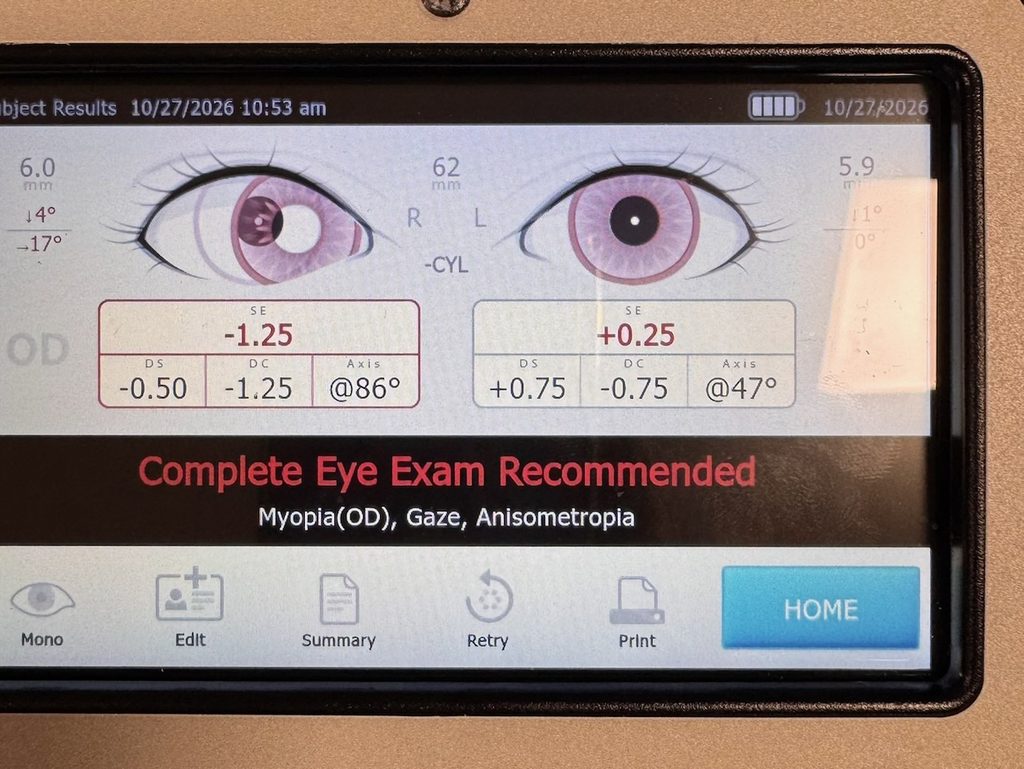
The Vision Screener helps to address a fundamental piece of the educational process: in the words of Lancelotta, “If you can’t see, you can’t read. If you can’t read, you can’t learn.”
The wellness benefits for the entire district, including support for vulnerable learners, made this project an ideal fit for funding from the Jean Hoadley Peterson Memorial Fund at MTEF. A mother, registered nurse, nurse educator, and community and church volunteer, Jean Hoadley Peterson ‘64, was a passenger on Flight 93 on September 11, 2001. The Jean Hoadley Peterson Memorial Fund supports career exploration in the health sciences, community engagement and volunteerism, health and wellness programs, and initiatives that build awareness and understanding across communities through leadership development, mentorship, and guest speakers, including a presentation every four years to help high school students learn about the events of 9/11 that forever impacted our country.
In observance of the 25th anniversary of 9/11, Jean’s classmate, Joe Moore, has pledged to match new donations made to this fund by December 15, 2026, up to $25,000. Donations can be made online or by sending a check made out to MTEF with Jean Hoadley Peterson Memorial Fund noted in the memo to: MTEF, 450A Candlewyck Road, Lancaster, PA 17601.